Information and musings
-
Emotional Life in Neurodivergent Individuals: Interoception, Masking, and the “Second Arrow”
Because the neurodivergent brain processes data from the bottom up, emotional experiences are frequently grounded in visceral physical sensations rather than immediate cognitive clarity. This process is governed by the insular cortex, the brain region responsible for interoception. Interoception is the sensory system that detects internal physiological signals—like heart rate, muscle tension, and digestion—and translates them into recognised emotions. Neurodivergent individuals frequently experience tendencies toward either heightened or reduced interoceptive sensitivity, or a combination of both. This may manifest as Alexithymia, a difference in identifying or differentiating between emotional states. Instead of a clear cognitive awareness of anxiety, an individual might experience a racing heart and stomach tension as generalised…
-
The Neurology of Neurodivergence: Bottom-Up Processing and Attention Tunnels
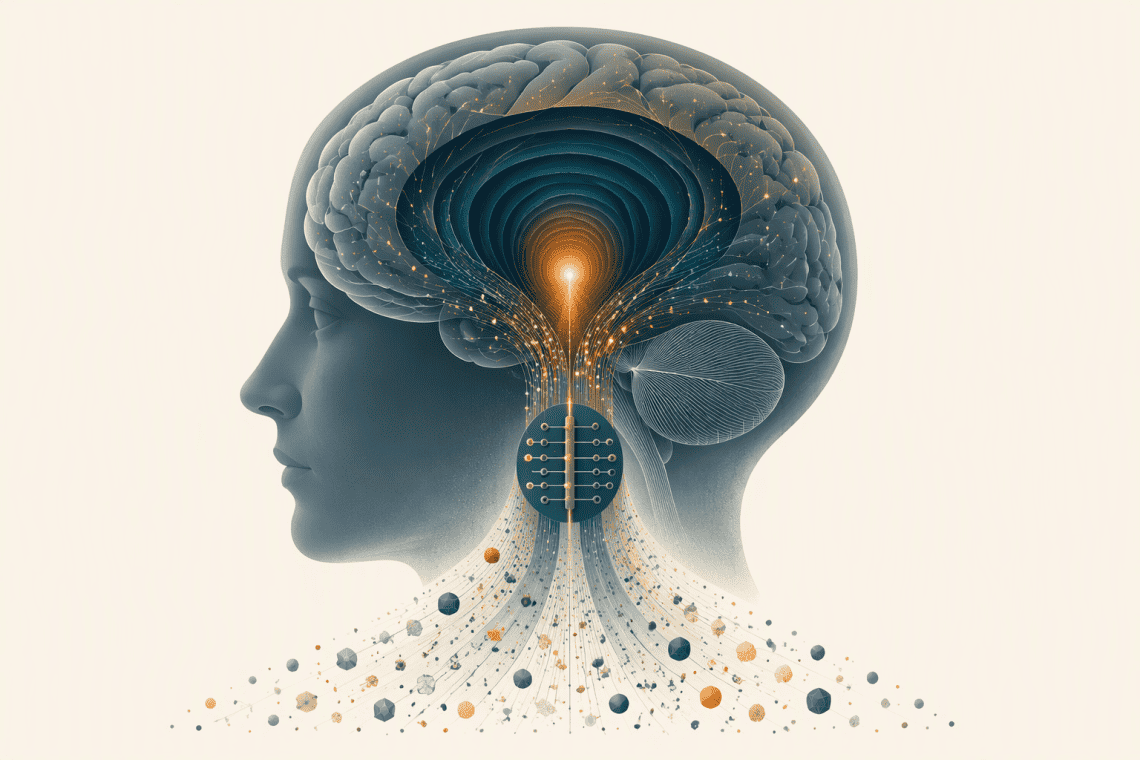
The neurodivergent brain—encompassing profiles such as Autism, ADHD, AuDHD, Dyspraxia, and Dyslexia—operates with a distinct neurological architecture. Many neurodivergent individuals are highly functional, utilising the unique strengths of this architecture, such as deep focus, rapid pattern recognition, and innovative problem-solving. However, these cognitive differences bring specific tendencies in how information and attention are filtered, requiring active management to maintain balance. A primary distinction lies in sensory processing. In a neurotypical model, the brain relies heavily on top-down processing and Predictive Coding Theory, utilising prior knowledge to automatically filter out irrelevant sensory data before it reaches conscious awareness. This is often compared to a colander, allowing extraneous sensory input to drain…